
Best
Late summer to early fall
- Penn State’s top window for seeding in Pennsylvania.
- Cooler weather and less weed competition.
- Seed should be down before mid October.
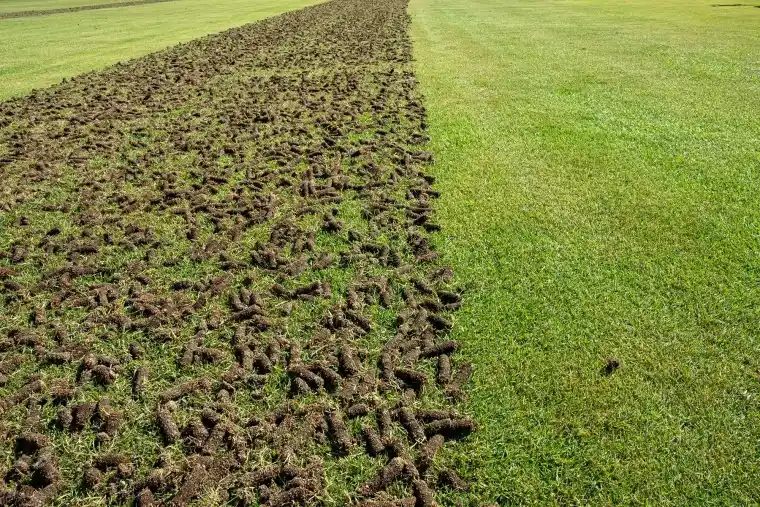
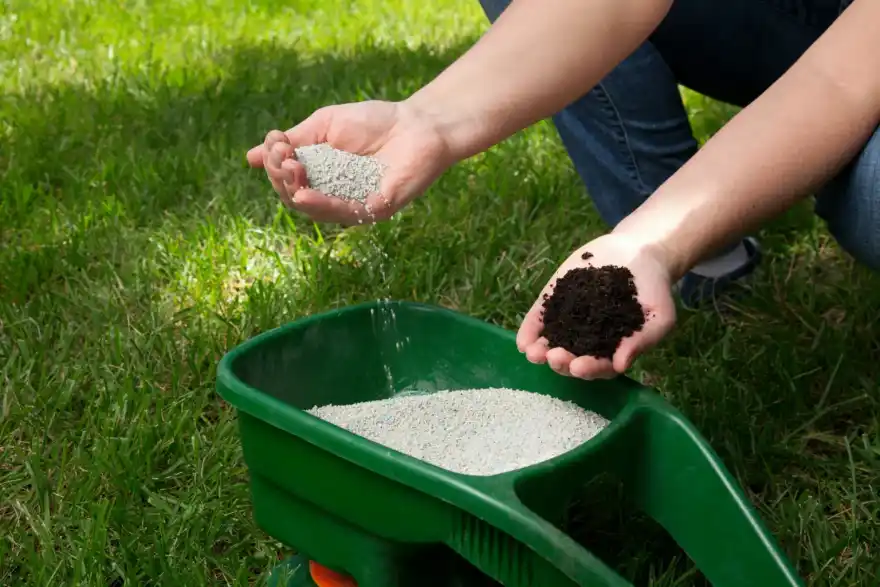
Core lawn aeration in Lebanon, PA, along with overseeding, dethatching and top dressing. The plugs are pulled and cleared off the lawn, and new seed goes down with a starter fertilizer to get it growing. Each visit is booked and paid on its own.
Check your lawn
If two or more of these sound familiar, the soil under your grass is likely packed too tight.
Rain sits on the surface instead of soaking in, a sign the soil is packed tight.
Paths, play areas and spots where cars or equipment cross get compacted first.
The grass never fills back in, no matter how often it is fed.
Thatch thicker than about an inch keeps water and air from reaching the soil.
Open soil is where weeds take hold first. See weed control.
How it works
A core aerator pulls small plugs of soil and thatch out of the lawn instead of just poking holes. The open channels let air, water and nutrients reach the roots, and give new seed a place to land. It also means lawn fertilization that follows can soak in instead of sitting on packed soil.
For lawns where thatch has built up past about an inch.
Available too. Ask about it when you call.
Picking the right seed
Pennsylvania lawns are mostly cool-season grasses, and each one suits a different spot.
| Grass | Best for | Sprouts in | Good to know |
|---|---|---|---|
| Kentucky bluegrass | Sunny, open lawns with foot traffic | Up to 2 weeks | Spreads by underground stems and repairs itself |
| Perennial ryegrass | Quick cover in sun | 5 to 7 days | Works best as part of a mix |
| Tall fescue | Heat, dry spells and partial shade | Slower to establish | Deep roots, the toughest in summer heat |
| Fine fescues | Shade and low-care areas | Slower to establish | Doesn’t like heavy traffic or wet soil |
Tell Eric how much sun and traffic each part of the lawn gets when you call.Source: Penn State Extension
Best
Second choice
After seeding
From day one
Keep the top of the soil moist but not soggy. Light watering, often once a day.
Days 5 to 14
Ryegrass comes up in about a week, and bluegrass can take two.
First mowing
Mow once the new grass is about a third taller than its mowing height.
Until it roots
Keep foot traffic, pets and equipment off the new grass.
Weeks 4 to 6
Hold off on broadleaf weed control until then.
How it works
Step 1
Point out the thin spots and how much sun they get.
Step 2
You know the cost before the aerator comes off the trailer.
Step 3
Plugs are pulled and cleared, then seed and starter fertilizer go down.
Step 4
Water lightly and stay off the new grass while it roots.
Step 5
One visit, with no ongoing plan to sign up for.
Where the aerator goes
Eric brings lawn aeration in Lebanon, PA and new seed to yards and commercial turf in the 17042 and 17046 ZIP codes, plus the townships and communities listed below. Planning a fall overseed? Call early with your address so the visit lands inside the seeding window.
Helpful answers
Have a different question? Call (717) 527-6546 and ask whether the lawn aeration Lebanon, PA properties get from Eric would help your yard.
Late summer to early fall, according to Penn State, with seed down before mid October.
Look for puddling, hard ground, thin patches that won’t fill in, or thatch thicker than about an inch.
No. The plugs are cleared off.
Yes. Overseeding is available on its own too.
Keep the top of the soil moist, usually with light watering once a day, until the grass is up and growing.
Once the new grass is about a third taller than its normal mowing height.
Wait 4 to 6 weeks for broadleaf weed control. Crabgrass preventers stop grass seed too, so they shouldn’t go down around seeding time.
Yes. It goes down with the seed.
Yes, both.
No. Aeration and overseeding are booked as a one-off visit.
Open Mon to Sat
Call with your address and tell Eric where the lawn is thin. Every lawn aeration Lebanon, PA customers book is priced per visit.